
Tackling Difficult-to-Drug Targets: PROTACs vs. Glue Degraders:
Drug discovery is moving beyond the “low-hanging fruits” of enzymes and receptors toward harder targets like transcription factors and scaffolding proteins. Instead of inhibiting them, a new paradigm is to degrade them using the cell’s proteasome. PROTACs: bifunctional molecules that tag proteins for destruction, though finding suitable ligands remains challenging. Glue degraders: smaller, more drug-like molecules that stabilize protein–ligase interactions, but are difficult to discover. Together, these approaches are redefining what’s druggable and opening new therapeutic possibilities.
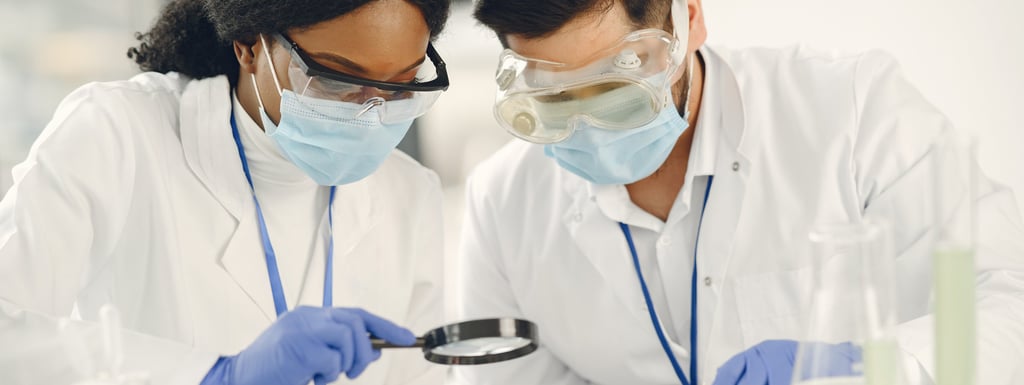
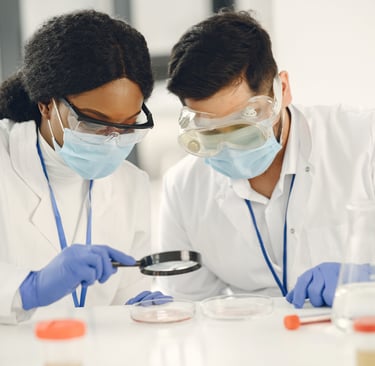
Small-molecule drug discovery has long focused on enzymes and receptors, capitalizing on their well-characterized binding pockets to create potent therapeutics. However, many diseases involve proteins once considered “undruggable,” such as scaffolding proteins and transcription factors. These proteins exert their biological effects through interactions with other proteins or nucleic acids, making them part of a growing class called "difficult-to-drug" targets.
Why Are These Targets Difficult?
Unlike classical drug targets, difficult-to-drug proteins lack deep, well-defined pockets for small molecules. Disrupting their interactions directly is rarely effective. Instead, degrading these proteins by hijacking the cell’s proteasomal machinery offers a solution—and two major approaches have emerged: PROTACs and glue degraders.
PROTACs: Bifunctional Solutions
PROTACs (Proteolysis Targeting Chimeras) are bifunctional molecules that simultaneously bind a target protein and an E3 ubiquitin ligase, bringing them together to trigger the target’s ubiquitination and destruction. Designing PROTACs starts with finding a ligand for the target protein—a complex challenge for difficult targets, as these often lack clear binding sites and have flexible structural domains. AI/ML and physics-based computational tools are being used to discover these ligands, with some success, but limitations remain.
Experimental approaches like high-throughput screening (HTS), DNA-encoded libraries (DELs), and fragment-based methods also play a role. Yet, necessary biophysical techniques (NMR, SPR, BLI, ITC, crystallography, MS) are costly and technically demanding, and data variability complicates structure-activity relationship (SAR) studies and optimization. Once both ligands (for the target and for the E3 ligase) are identified, they are chemically linked and the resulting PROTAC is refined to maximize degradation efficiency.
Feature PROTACs Glue Degraders
Design Bifunctional Monofunctional
POI Binding Required Yes No
Size Larger Smaller
‘Hook Effect’ Present Absent
Discovery Challenges Ligand ID glues ID
Tools and Assays NMR, SPR, BLI TR-FRET
ITC, MS AlphaScreen
AI/ML Impact Helps with ligand Accelerates
discovery and opt glue design
Glue Degraders: Monofunctional Innovators
Glue degraders represent a different concept: they are monofunctional molecules designed to strengthen the (usually weak) pre-existing affinity between an E3 ligase and the target protein. Successful glues do not require strong binding to the target protein, making ligand discovery fundamentally different. Libraries of E3 ligase binders are screened for their ability to promote the ternary complex, using assays such as TR-FRET or AlphaScreen, followed by cellular confirmation via nanobret or western blot.
The surface interactions that glue degraders rely on are better understood now, thanks to advances in structural biology, enabling more rational design approaches that are increasingly aided by AI/ML methods.
Comparing PROTACs and Glue Degraders
Outlook and Challenges Ahead
Both PROTAC and glue degrader strategies are opening new horizons in targeting proteins once considered inaccessible to conventional small molecules. The rational design of glue degraders, especially, is a rapidly evolving area. PROTACs benefit from a more straightforward path once suitable ligands are found, while glue degraders can offer superior drug-like properties and avoid the ‘hook effect’. However, glue degrader discovery is still highly challenging, with ongoing efforts to identify molecules that reliably induce degradation.
Advancements in AI/ML, enhanced libraries, and new screening technologies are helping to overcome the obstacles of both methods, bringing hope for future therapies targeting the toughest diseases.
Expert drug discovery and consulting services for biotech firms and Institutes
© 2025. All rights reserved.
Contact Us Tel: +91 98456 80674 Email: contact@bioprompt.in
Consulting Services
Training programs and workshop in Drug Discovery
Targets for Drug Discovery
Facilitation of Preclinical Studies
Location NB-3/44, Vijaya Enclave Bilekahalli, Bangalore - 560076 Karnataka, INDIA
All images are designed by freepik