
Radiopharmaceuticals: An Emerging Tool in the Fight Against Cancer

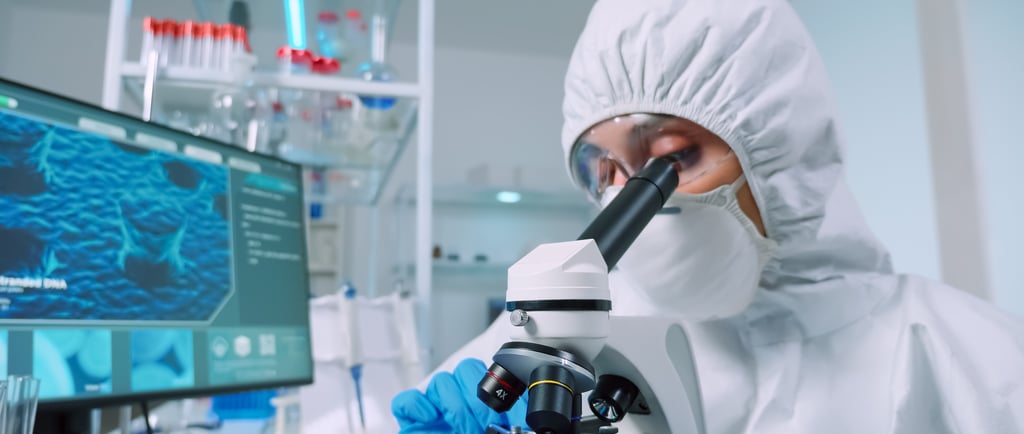
In recent years, cancer treatment has undergone a revolution, led by cutting-edge innovations like antibody-drug conjugates (ADCs), bispecific or multispecific antibodies, and cell and gene therapies—especially CAR-T cell therapy. Amidst this wave of progress, another powerful modality is gaining momentum, often quietly: radiopharmaceuticals.
What Are Radiopharmaceuticals?
Radiopharmaceuticals combine radioactive isotopes with biological molecules—such as peptides or antibodies—that bind specifically to cancer cell surface proteins. This targeted approach allows these agents to serve a dual purpose:
Diagnostics: Visualizing tumors with precision through imaging.
Therapeutics: Delivering focused radiation to destroy cancer cells, while minimizing harm to healthy tissue.
This duality has led to the term "theranostics"—a fusion of therapy and diagnostics—which perfectly encapsulates the potential of radiopharmaceuticals in modern oncology.
Precision Oncology Meets Radiopharmaceuticals
As the oncology field increasingly emphasizes precision medicine, radiopharmaceuticals are a natural fit. These agents target specific tumor markers, aligning with the goal of maximizing efficacy while minimizing toxicity.
Two notable examples of FDA-approved radiopharmaceuticals include:
Pluvicto™ (Lu-177-PSMA-617): Targets the prostate-specific membrane antigen (PSMA) for treating prostate cancer.
Lutathera® (Lu-177-DOTATATE): A peptide-based therapy targeting the somatostatin receptor, commonly overexpressed in neuroendocrine tumors.
More recently, ITM-11, developed by ITM Radiopharma, demonstrated superior efficacy over the standard of care drug everolimus in Phase 3 trials for gastroenteropancreatic neuroendocrine tumors (GEP-NETs) - signalling even greater promise for radiopharmaceuticals.
Surge in Investment and Industry Interest
The growing potential of radiopharmaceuticals has not gone unnoticed by investors and pharmaceutical giants:
Actithera raised $75.5 million.
Nuclidium secured €84 million in funding.
Novartis acquired Mariana Oncology for $1 billion.
Eli Lilly acquired POINT Biopharma for a staggering $1.4 billion.
These significant deals underscore the increasing confidence in radiopharmaceuticals as a future pillar of cancer therapy.
Broadening Horizons: Beyond Prostate and Neuroendocrine Cancers
While current approvals are focused on prostate and neuroendocrine tumors, research is expanding into other types of cancer. An exciting new frontier is DARPin-based radiotherapy, where engineered proteins called DARPins (Designed Ankyrin Repeat Proteins) are used to deliver radioactive payloads with even greater specificity. For instance, MPO71L, the first DARPin-based radiopharmaceutical, targets DLL, a novel cancer marker.
Theranostics and Isotope Versatility
One of the standout advantages of radiopharmaceuticals is their isotope agnosticism. The same biological targeting molecule can be paired with different isotopes for either diagnostics or treatment:
Alpha emitters are often used for diagnosis due to their high energy and short range.
Alpha and beta emitters are used for therapy, delivering lethal radiation directly to cancer cells.
Commonly used isotopes include Lutetium-177, Actinium-225, Lead-212, and Copper-64, each with unique properties suited to specific clinical applications.
The Future of Radiopharmaceuticals
Radiopharmaceuticals sit at the intersection of molecular biology, nuclear medicine, and precision oncology. Their ability to both locate and eliminate cancer cells with minimal off-target effects makes them a uniquely powerful tool. As research advances and clinical success stories accumulate, radiopharmaceuticals are poised to play a major role in the next generation of cancer therapies.
Expert drug discovery and consulting services for biotech firms and Institutes
© 2025. All rights reserved.
Contact Us Tel: +91 98456 80674 Email: contact@bioprompt.in
Consulting Services
Training programs and workshop in Drug Discovery
Targets for Drug Discovery
Facilitation of Preclinical Studies
Location NB-3/44, Vijaya Enclave Bilekahalli, Bangalore - 560076 Karnataka, INDIA
All images are designed by freepik