
Inhibition of Protein-Protein interaction (PPI) for drug development
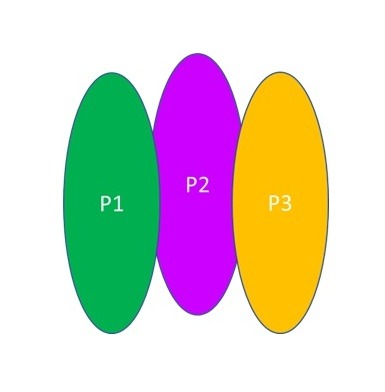
As traditional drug targets with well-defined binding pockets become saturated, the focus is shifting toward protein–protein interactions (PPIs) — critical but complex networks that control transcription, signaling, and other biological processes. Although PPIs feature large, flexible surfaces that make them difficult to modulate with conventional small molecules, groundbreaking modalities such as targeted protein degradation (PROTACs and molecular glues), helical and stapled peptides, recombinant proteins and antibodies, and macrocyclic/small-molecule disruptors are rapidly unlocking these “undruggable” targets. The ability to successfully drug PPIs is expanding therapeutic possibilities and redefining what is considered druggable in modern medicine.

For decades, drug discovery has focused mainly on enzymes, receptors, and other targets with well-defined binding pockets suitable for small molecules. However, many disease-relevant proteins—such as transcription factors and scaffolding proteins—lack such features. These so-called “undruggable/difficult-to-drug” targets often modulate cellular processes through protein-protein interactions (PPIs), which involve broad, dynamic interfaces that are challenging to disrupt with traditional small-molecule drugs.
The Challenge of Targeting Protein-Protein Interfaces
Protein-protein interfaces are typically large, flat, and hydrophobic, making it difficult for small molecules to achieve both high affinity and selectivity. Unlike the deep active sites of enzymes, PPIs often lack obvious binding pockets. Despite these challenges, a number of innovative modalities and strategies have emerged, transforming the landscape of drug discovery.
Emerging Modalities Transforming PPI Targeting
Several new therapeutic modalities are redefining how researchers approach PPI modulation:
Molecular Glues and PROTACs: Small molecules such as molecular glues can selectively stabilize or disrupt multiprotein complexes. A notable example is the Revolution Medicines KRAS-targeting molecular glue, which promotes formation of a ternary complex with an effector protein, preventing KRAS from interacting with other signaling partners. PROTACs take this further by inducing targeted protein degradation, completely eliminating the protein and thereby disrupting its interactions.
Helical and Stapled Peptides: Peptide-based therapeutics, especially α-helical peptides that mimic natural protein structures, are proving valuable for PPI targeting. Parabilis Therapeutics, for instance, has developed proprietary helical peptides that disrupt the β-catenin/TCF interaction to modulate Wnt pathway signaling. Stapled peptides enhance stability and cell permeability, overcoming many traditional peptide limitations.
Recombinant Proteins and Antibodies: High-affinity recombinant proteins or engineered antibodies can competitively bind to one partner of a PPI, blocking disease-relevant complexes. Antibodies, due to their large interaction surfaces and specificity, remain powerful tools for extracellular PPIs such as the PD-1/PD-L1 checkpoint axis.
Macrocycles and Small-Molecule Disruptors: Advances in chemistry have made it possible to design macrocyclic compounds that can engage large, flat PPI surfaces. Venetoclax, a clinically approved BCL-2 inhibitor, exemplifies how a small molecule can successfully disrupt a critical PPI in oncology. Similarly, certain small molecules can induce dimerization or conformational changes that prevent productive protein interactions.
A Paradigm Shift Toward Structural and Chemical Innovation
The expansion of the druggable proteome through PPI targeting reflects a broader shift in drug discovery—from identifying binding sites to engineering interactions. The integration of molecular glues, targeted degradation, and advanced peptide chemistry is blurring the line between traditional small molecules and biologics. Combined with structural biology and computational modeling, these innovations are opening new therapeutic possibilities against previously intractable targets.
Expert drug discovery and consulting services for biotech firms and Institutes
© 2025. All rights reserved.
Contact Us Tel: +91 98456 80674 Email: contact@bioprompt.in
Consulting Services
Training programs and workshop in Drug Discovery
Targets for Drug Discovery
Facilitation of Preclinical Studies
Location NB-3/44, Vijaya Enclave Bilekahalli, Bangalore - 560076 Karnataka, INDIA
All images are designed by freepik