
Harnessing “PROTACs” to Fight Parkinson’s Disease
In Parkinson’s disease, misfolded alpha-synuclein (α-syn) proteins aggregate into toxic fibrils and Lewy bodies, leading to neuronal death. A recent study by Shen et al. (2025) explored using PROTACs (Proteolysis Targeting Chimeras) to degrade α-syn directly. Their designed molecule, Arg-PEG1-Tα-syn, linked α-syn–binding and E3 ligase–recruiting moieties, effectively reducing protein aggregates and toxicity in cell and C. elegans models.
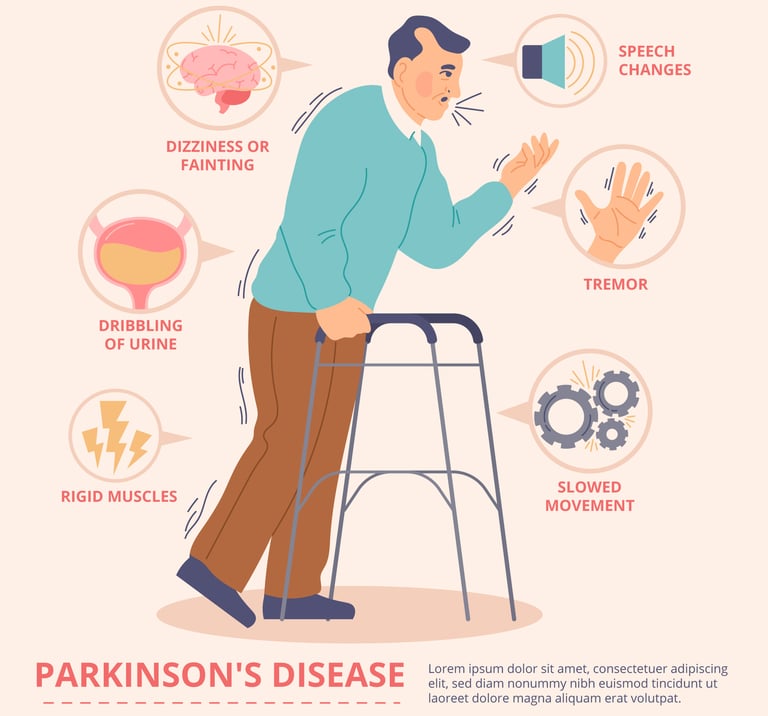
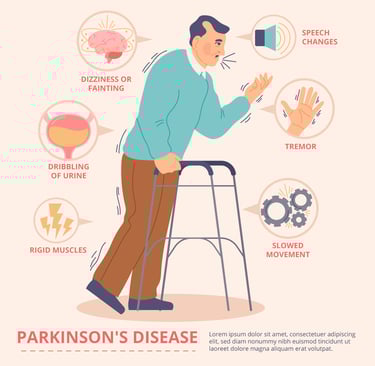
In Parkinson’s disease (PD), a protein called alpha-synuclein (α-syn) and its mutants forms misfolds and aggregates to form toxic fibrils that accumulate into Lewy bodies and Lewy neurites within neurons. These aggregates are a hallmark of PD, leading to selective neuronal death and synaptic dysfunction.
Monomeric α-synuclein is intrinsically disordered in solution. During aggregation, it transitions from an α-helical to a β-sheet–rich structure — forming oligomers, protofibrils, and finally mature fibrils. This structural conversion is central to amyloid formation and toxicity.
🧩 A promising therapeutic strategy focuses on preventing or dissolving these fibrillar structures. One innovative approach involves PROTACs (Proteolysis Targeting Chimeras) - bifunctional molecules that recruit an E3 ubiquitin ligase to selectively tag the target protein for degradation by the proteasome.
A recent study by Shen et al. (2025) (https://www.sciencedirect.com/science/article/pii/S0021925825022999) demonstrated this concept beautifully. They designed a PROTAC that links a benzothiazone moiety (binding to the hydrophobic sites on the fibrils) to an arginine moiety (recruiting the E3 ligase UBR1). This molecule –Arg-PEG1-Tα-syn - significantly reduced α-syn aggregates and associated toxicity in both mammalian cells and C. elegans models.
These findings highlight the potential of amino acid–based PROTACs targeting α-syn for degradation - opening a new avenue for treating Parkinson’s disease and other synucleinopathies.
🔬 The road ahead is long, but the idea of degrading rather than inhibiting misfolded proteins could redefine how we approach neurodegenerative diseases.Write your text here...
Expert drug discovery and consulting services for biotech firms and Institutes
© 2025. All rights reserved.
Contact Us Tel: +91 98456 80674 Email: contact@bioprompt.in
Consulting Services
Training programs and workshop in Drug Discovery
Targets for Drug Discovery
Facilitation of Preclinical Studies
Location NB-3/44, Vijaya Enclave Bilekahalli, Bangalore - 560076 Karnataka, INDIA
All images are designed by freepik