
Drugging the Undruggable Targets: Opportunities and Challenges
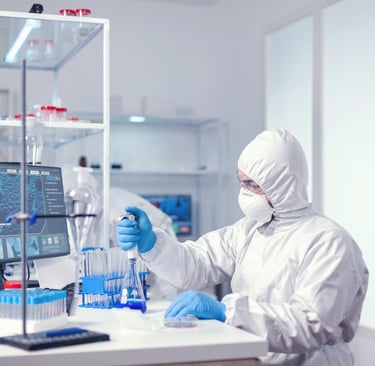
For decades, many proteins linked to human disease were considered “undruggable.” These proteins are - difficult or even impossible - to modulate effectively with traditional drug design approaches, often because they feature flat or dynamic interfaces lacking well-defined binding pockets. Such targets commonly include transcription factors, scaffolding proteins, and notoriously challenging proteins like KRAS.
Advances in AI/ML-driven drug design, new therapeutic modalities such as PROTACs, molecular glues, and glue degraders, and landmark breakthroughs like the development of covalent KRasG12C inhibitors have given researchers fresh optimism. In fact, it is now believed that nearly 90% of the human proteome-once thought out of reach-could theoretically be targeted. Consequently, terms like “difficult to drug” or “yet to be drugged” are becoming more appropriate than “undruggable.
Yet, while the opportunities are immense, the practical realities are daunting. The path to successfully drugging difficult targets is fraught with experimental hurdles, high costs, and technical complexity. Here are the main strategies and their hurdles
1. PROTACs
Bifunctional molecules that link a target protein to an E3 ligase, marking it for degradation. The first and most critical step is finding a binder to the target protein.
Strategies for finding binders:
High Throughput Screening (HTS): Requires vast libraries and costly infrastructure.
DNA-Encoded Libraries (DEL): Often outsourced; prone to false positives and expensive to validate.
Fragment-Based Drug Discovery: Requires fragment libraries, specialized assays, proteomics for covalent hits, and crystallography for co-crystal structure determination and further optimization.
AI-driven molecule design: Relies on structural information (X-ray, cryo-EM, or AlphaFold predictions) to identify potential pockets.
The real bottleneck:
Setting up the right screening assay. Unlike enzyme or receptor assays (mostly fluorescence- or luminescence-based), which are relatively easy to perform and provide a direct functional readout, assays to monitor binding to transcription factors or scaffolding proteins often require advanced methods such as SPR, BLI, ITC, MST, DSF, or NMR. These techniques demand high-end instruments, deep expertise, and careful orthogonal validation-especially for weak binders.
2. The Covalent Approach
Some “undruggable” proteins can be tackled with covalent inhibitors. This strategy hinges on the presence of a reactive amino acid residue (most often cysteine) within or near a binding pocket.
A well-positioned reactive residue (preferably cysteine) and binding pocket that can accommodate a 400–500 Da molecule with sufficient interactions near this residue
Proteomics (peptide fingerprinting) and crystallography to confirm binding mode.
Off-target binding to other cysteines in the same protein or other proteins can trigger toxicity.
3. Molecular Glues and Glue Degraders
Molecular glues stabilize the interaction of a target protein with other proteins (e.g., KRas–cyclophilin A binding), preventing it from performing its normal function. Glue degraders, on the other hand, enhance interactions with E3 ligases to trigger degradation.
Current state:
Most of the molecular glues were discovered serendipitously, not through rational design.
Rational glue design is an area of active research, but still in its early stages.
Readymade glue libraries are now available for screening.
4. AI/ML-Driven Drug Design
AI and machine learning have become integral to drug design and optimization and are often touted as game-changers for tackling difficult targets. Structure prediction tools like AlphaFold can help identify potential binding sites, while generative AI models can propose novel molecules.
However, it is important to note:
Most AI-designed drugs in clinical trials so far target already druggable proteins with known binding information.
For novel, hard-to-drug proteins, the success of AI/ML approaches is yet to be proven.
Looking Ahead: A Difficult but Promising Road
We are entering an exciting era in which the very concept of “undruggable” is being redefined. With PROTACs, covalent inhibitors, molecular glues, and AI design, the drug discovery toolkit is far richer than it was even a decade ago.
The push to drug undruggable targets is one of the most promising frontiers in biopharma today. However, start-ups and small organizations with limited resources should carefully evaluate feasibility before initiating discovery programs in this space, given the significant costs, expertise, and infrastructure required.
Expert drug discovery and consulting services for biotech firms and Institutes
© 2025. All rights reserved.
Contact Us Tel: +91 98456 80674 Email: contact@bioprompt.in
Consulting Services
Training programs and workshop in Drug Discovery
Targets for Drug Discovery
Facilitation of Preclinical Studies
Location NB-3/44, Vijaya Enclave Bilekahalli, Bangalore - 560076 Karnataka, INDIA
All images are designed by freepik